 Skip to content





Why Are Candock Floating Docks an Eco-Friendly Option?
At Candock, we believe docks are more than simple floating structures. They are bridges between people and aquatic environments, creating a direct connection with nature—from lakes to oceans and rivers.
This close relationship with water guides every design decision we make. It drives us to create floating docks that are durable and environmentally responsible, designed to coexist harmoniously with the ecosystems that surround them.
Here’s why Candock plastic floating docks represent an eco-friendly option, today and for years to come.
Durability That Preserves Resources
One of the key pillars of an eco-friendly product is longevity. The longer a piece of equipment lasts, the less often it needs to be replaced—and the less waste it generates.
Candock floating docks are designed to withstand:
- temperature fluctuations,
- UV exposure,
- freeze-thaw cycles,
- demanding aquatic conditions.
Unlike some wooden or metal docks that can deteriorate quickly and require frequent replacement, a Candock dock retains its structural integrity for decades.
Our client, Doc Warner’s Alaska Fishing Lodge, has relied on its Candock dock for over 25 years. Read its testimony here.

Modularity as an Environmental Principle
A dock that evolves with your needs
A fixed dock is often designed for a specific use—and becomes obsolete when needs change. In contrast, Candock floating docks are fully modular.
This means you can expand your dock, modify its configuration, add accessories, or adapt it to new uses (boats, personal watercrafts, swimming, and more), all without starting from scratch.
Repair rather than replace
Another key advantage: in the event of wear or damage, there’s no need to replace the entire dock.
Thanks to their modular design, only the affected components can be replaced. This extends the dock’s overall lifespan, reduces the use of new materials, and limits unnecessary waste.

Responsible Materials
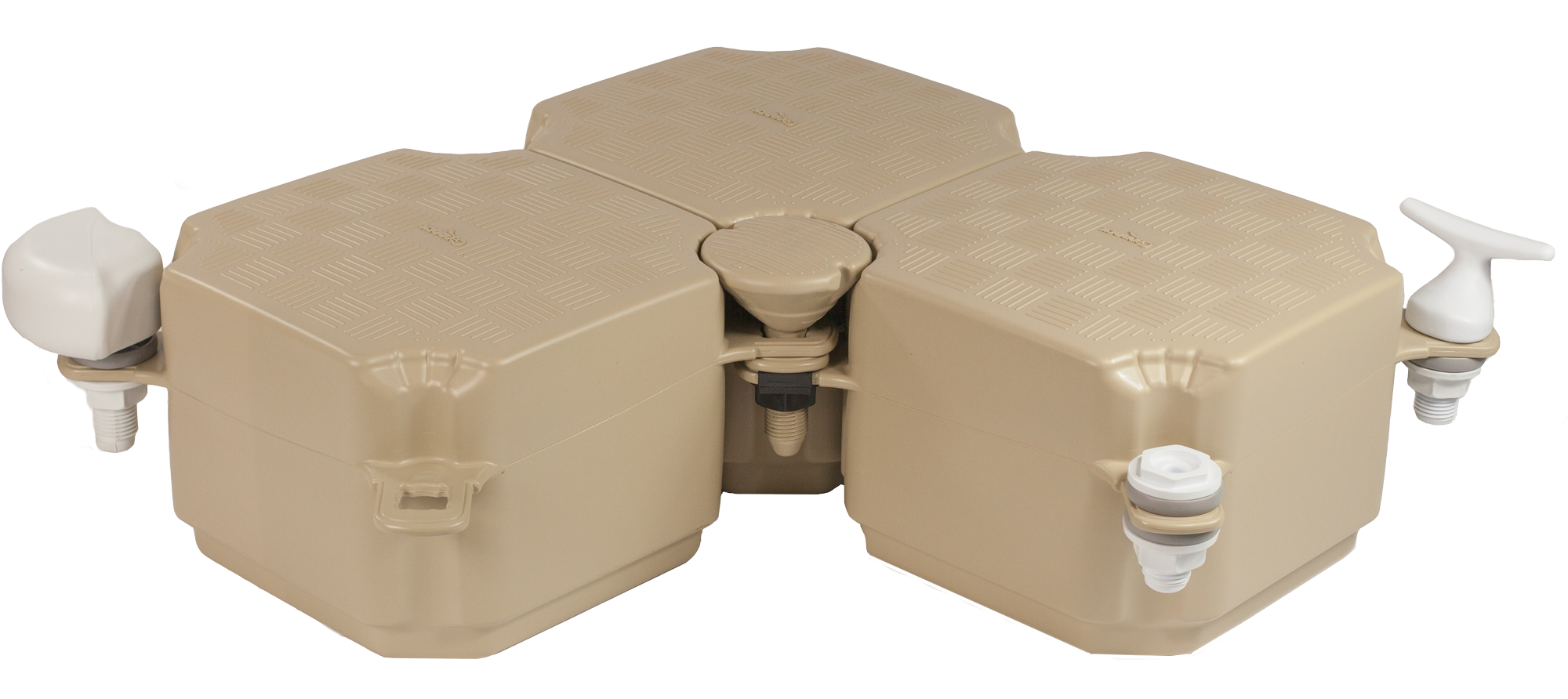
The G2 Cubes—the main component of our docks—are made from HDPE (High-Density Polyethylene), a highly durable plastic known for its resistance to impacts, wear, chemicals, acids, and even low temperatures.
Another key advantage: HDPE offers one of the highest recyclability rates among plastics.
In addition, the cubes are not filled with foam. They are hollow. This means that in the unlikely event of damage, no particles are released into the water, significantly reducing the risk of pollution in aquatic environments.

As for our Tiles Series, it is made of recycled plastic, helping reduce the use of virgin raw materials.

Floating Design That Respects Aquatic Environments
Candock floating docks rely on floatability rather than permanent foundations, eliminating the need for drilling or altering lakebeds and seabeds.
A floating dock can also be removed, relocated, or reconfigured without leaving permanent traces in the environment.
In short, this approach helps limit disturbances to aquatic ecosystems.

Minimal Maintenance, No Harmful Products
Wooden docks often require stains, paints, or treatments to prevent mold and deterioration.
With Candock, these steps are unnecessary. No painting or chemical treatments are needed to preserve the structure. Maintenance generally consists of simple cleaning with water, and mild soap when needed.
The result: fewer harmful products released into the environment, reduced long-term maintenance, and a more responsible solution for the bodies of water where the dock is installed.
To learn more about dock maintenance, read this previous blog article.

In Summary
Candock plastic floating docks demonstrate that a product can be both robust, adaptable, and environmentally responsible. Thanks to their durability, modularity, use of responsible materials, and minimal impact on aquatic environments, they represent a thoughtful eco-friendly option for residential, commercial, and government projects.
Considering a more sustainable dock project?